
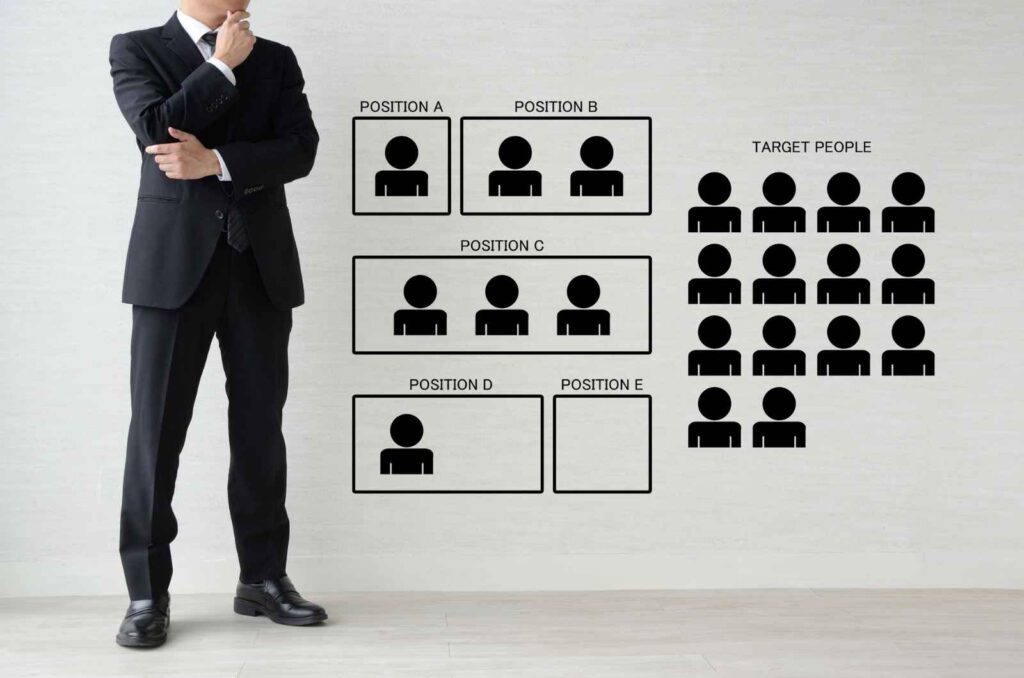
The choice between a dedicated development team and staff augmentation is one of the most consequential structural decisions a technology organization makes. Both models provide access external engineering talent. Both can reduce costs relative to in-house hiring. But they differ fundamentally in terms of accountability, management overhead, integration depth, and long-term value creation. Understanding these differences is essential for organizations evaluating their development strategy in 2025.
What Is the Core Difference Between a Dedicated Team and Staff Augmentation?
Staff augmentation places individual external engineers under the direct management of the client's internal team. The client handles task assignment, performance management, technical direction, and process coordination. A dedicated development team, by contrast, comes with its own internal structure a technical lead, defined workflows, and a team-level accountability for outcomes. The practical implication is that staff augmentation amplifies an existing management capability, while a dedicated team can operate with greater independence and is better suited to organizations that need outcomes rather than labor hours.
When Does Staff Augmentation Outperform the Dedicated Team Model?
Staff augmentation is the appropriate choice when an organization has a strong internal engineering team that needs one or two additional specialists for a defined period. If the client's technical leadership can absorb the management overhead of directing individual external engineers, and the scope of work is narrow enough that deep team alignment is unnecessary, staff augmentation provides flexibility without the onboarding investment of a dedicated team. It is also appropriate for very short engagements typically under three months where building the shared context required by a dedicated team is not cost-effective.
When Does the Dedicated Team Model Deliver More Value?
The dedicated team model outperforms staff augmentation in three scenarios. First, when the organization lacks the internal management capacity to direct individual external engineers a dedicated team's built-in technical leadership fills this gap. Second, when the product requires sustained, deep-context engineering over a period of six months or more the team's accumulating institutional knowledge becomes a compounding asset. Third, when the scope of work spans multiple domains simultaneously full-stack development, DevOps, QA, and design and coordinating individual augmented specialists across these domains would create significant overhead for internal managers.
How Do the Cost Structures Differ Between the Two Models?
Staff augmentation typically bills by individual resource at a daily or monthly rate. Clients pay for hours worked but absorb all coordination, management, and integration costs themselves. A dedicated team typically charges a monthly team rate that includes not just engineer time but also team-level processes, technical leadership, and delivery management. The all-in cost comparison depends heavily on how much internal management time is invested in the staff augmentation model organizations that underestimate this often find that a dedicated team is less expensive in practice once the full cost of coordination is accounted for.
What Are the Intellectual Property and Continuity Implications?
In both models, reputable providers contractually assign all intellectual property created by external personnel to the client. The more meaningful continuity difference is in knowledge retention. Staff augmentation engagements end with the individual engineer, taking their product knowledge with them unless exceptional documentation practices are maintained. A dedicated team, as a unit, retains collective knowledge across member transitions when one engineer leaves the team, the others maintain continuity. For complex products with long development histories, this structural advantage is significant.
How Does Each Model Handle Scaling?
Staff augmentation scales by adding individuals, which requires repeated sourcing, vetting, and onboarding cycles. The dedicated team model scales by expanding the team structure adding roles rather than individuals which preserves the team's internal coherence and reduces the marginal onboarding cost of each additional member. For organizations in rapid growth phases, where engineering capacity needs to expand by two or three times in a short period, the dedicated model's team-level scaling is substantially more efficient than sourcing individual augmented engineers.
Sentice's Approach to Both Models
Sentice specializes in the dedicated team model, embedding cross-functional engineering teams directly into client organizations. The company's local team integration approach working from a shared office environment reduces the management overhead typically associated with distributed models, making the dedicated team experience closer to an in-house team without the hiring cost. For startups and scaleups that need both engineering capacity and technical leadership, Sentice's model provides a more complete solution than individual staff augmentation, combining execution capability with the strategic guidance of experienced technical advisors.
The dedicated development team model and staff augmentation serve different organizational needs. Staff augmentation is the right tool for amplifying strong internal teams with specific skills on a short-term basis. The dedicated team model is the right tool for organizations that need sustained, full-spectrum engineering capability, deep product alignment, and team-level accountability for outcomes. In 2025, as product complexity and development speed requirements continue to rise, the dedicated team model is increasingly the default choice for growth-stage technology companies.